The Soul of Engine Power: Why Cylinder Compression Dictates Everything
In the world of tuning and performance maintenance, many get obsessed with "external hardware"—larger turbos, high-flow intakes, or advanced ECU remapping. However, these are merely "additions," whereas Cylinder Compression is the baseline (the zero point) of all power.
Core Argument: No matter how premium your hardware is, if your compression is compromised, the performance will be too.
I. What is Compression? — The Engine’s "Foundation" Compression refers to the pressure generated within the combustion chamber as the piston reaches Top Dead Center (TDC) during the compression stroke. It is the most fundamental and honest indicator of an engine's health:
-
Optimal Pressure: Intense combustion, solid piston force, and crisp throttle response.
-
Pressure Leaks: Energy escapes as "blow-by" into the crankcase, leading to power loss, poor fuel economy, and idle vibration. Think of it as a bucket: If the bottom is leaking, it doesn’t matter how wide you open the faucet (intake/boost)—you can never fill it.
II. The Two Keys to Locking in Compression: Liquid Gaskets and Solid Patching Maintaining compression requires more than just metal piston rings; it requires "micro-sealing" at the micron level—a synergy of fluid mechanics and chemistry.
-
The "Liquid Gasket" Effect of Oil Viscosity Oil does more than lubricate; it acts as a liquid seal between the piston rings and cylinder walls.
-
HTHS (High-Temperature High-Shear): The critical metric for locking in pressure. Under extreme heat, standard oils thin out, causing the oil film to collapse and pressure to leak.
-
Robust Oil Film Support: Fully synthetic oils with high HTHS (such as ester-based formulas) maintain molecular integrity under stress. This tough, resilient film acts like a cushion, sealing combustion pressure above the piston to maximize downward thrust.
-
-
The "Solid Patching" Engineering of Additives Even the most precisely machined engines have microscopic irregularities on the cylinder walls and ring surfaces.
-
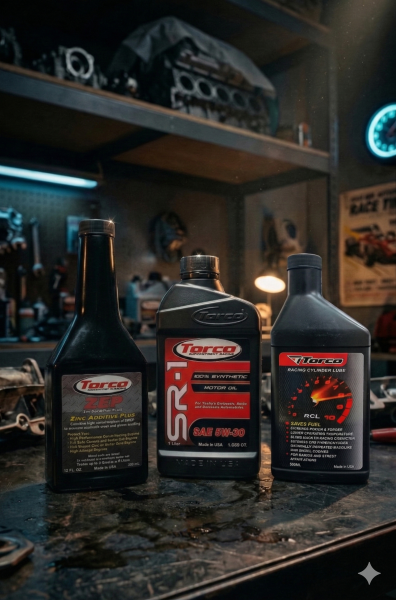
Physical Filling (Zinc, Phosphorus, Molybdenum): High-dose additives (like ZEP) deposit these elements into microscopic grooves, acting like a "finishing putty" to recover lost pressure.
-
Ring Freedom: High-quality additives clean carbon deposits from ring lands, ensuring the rings expand freely and seat perfectly against the cylinder wall for a 100% airtight seal.
-
III. The Market Blind Spot: Output vs. Efficiency There is a common disconnect in car culture: chasing "Stage" tunes and peak horsepower while neglecting the "vessel" (the engine) itself.
-
The Illusion of ECU Compensation: Modern ECUs are smart. When compression drops, the computer compensates by increasing fuel injection or adjusting timing. This creates a "bloated" performance where the driver thinks the car is fine, but efficiency is tanking.
-
The Loss of "Pressure Feel": An engine with poor compression feels "airy" and laggy. An engine with healthy compression offers an instant, tactile, and solid throttle response—this is the "Pressure Feel" that professional drivers crave.
IV. Conclusion: Secure the Pressure, Secure the Power Horsepower is a calculation, but compression is the reality. An engine with balanced, high compression not only delivers power on demand but also achieves exceptional fuel efficiency (e.g., hybrid systems reaching 23.8 km/L).
By optimizing base oils (ester blends) and reinforcing with anti-wear additives (ZEP/MPZ), we aren't just "tuning"—we are locking down every ounce of combustion energy.
"Power can be modified later, but compression must be guarded daily through precision maintenance."