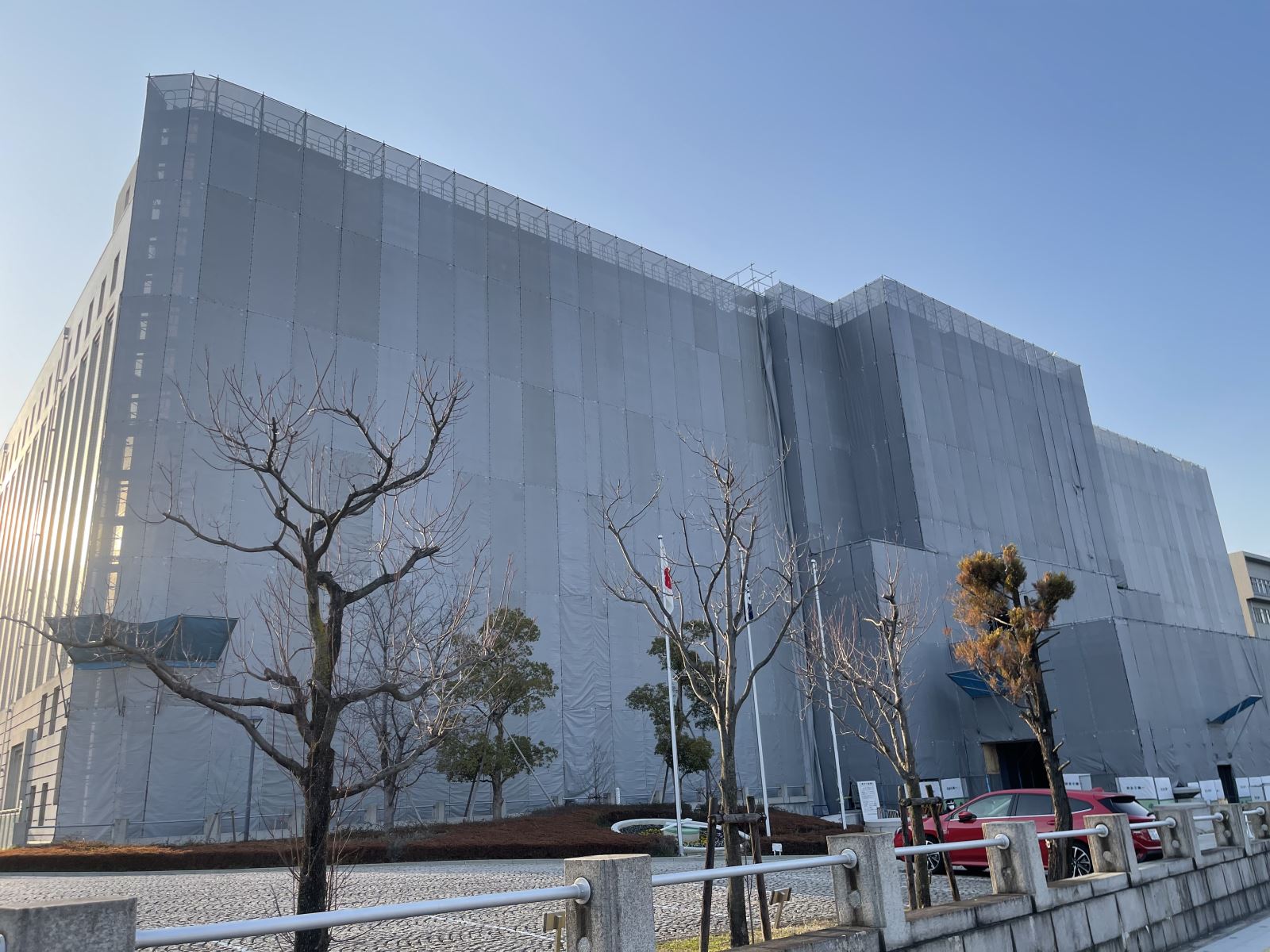
The core reason for using flame-retardant (FR) debris netting is for "Life Safety" and Preventing the Spread of Disaster.
At construction sites or renovation areas, debris netting usually covers the exterior of the scaffolding over a large area. If this layer of netting is flammable, the consequences of a fire would be catastrophic.
Here are the key reasons why using flame-retardant debris netting is mandatory:
1. Avoiding the "Chimney Effect" and Uncontrollable Fires
This is the most dangerous physical phenomenon. Debris netting usually wraps vertically around the building.
-
The Danger of Ordinary Nets: If the net is not flame-retardant, once a fire starts at the bottom, the flames will rapidly shoot upward along the net. The space between the scaffolding and the building forms a channel acting like a chimney, where air convection allows the fire to engulf the entire building within minutes.
-
The Function of FR Nets: Flame-retardant nets are specially treated. When exposed to a fire source, they carbonize and shrink rather than creating an open flame spread. They possess self-extinguishing properties, meaning the fire dies out once the ignition source is removed, effectively cutting off the vertical path of the fire.
2. High-Risk Ignition Sources at Sites (Hot Work)
Construction sites are high-risk areas for fires. Common causes include:
-
Welding Sparks: High-temperature slag or flying sparks during welding.
-
Cutting Operations: Sparks generated from cutting metal.
-
Electrical Faults: Short circuits in temporary wiring.
-
Cigarette Butts: Worker negligence.
Ordinary plastic (PE) nets can ignite instantly upon contact with a single hot welding slag; FR nets can withstand brief contact with high temperatures without combusting.
3. Regulations and Insurance Requirements
For public safety, fire codes in most countries and regions have clear regulations for construction sites:
-
Fire Codes: Regulations often state that coverings (such as debris nets and tarps) used in high-rise buildings, specific engineering projects, or public places must pass flame retardancy tests (e.g., NFPA 701, CNS 10285) and bear a fire-retardant label.
-
Insurance Claims: If a fire occurs and investigations reveal that compliant flame-retardant materials were not used, insurance companies may refuse to pay claims, leaving owners and contractors facing massive losses.
4. Gaining Golden Time for Evacuation
-
Reducing Smoke Toxicity: When ordinary plastic nets burn, they produce massive amounts of thick black smoke and toxic gases (such as dioxins), which are often the primary cause of death in fires. While FR nets still produce smoke, the volume is significantly lower because they do not sustain combustion.
-
Preventing Molten Droplets: Burning ordinary nets creates high-temperature "plastic droplets" that rain down. This not only injures escaping personnel but also ignites flammable materials below (like cardboard or paint), causing "3-dimensional burning." FR nets are designed to resist dripping.
Comparison: Ordinary Debris Net vs. Flame-Retardant Debris Net
| Feature | Ordinary Net (Standard PE) | Flame-Retardant Net (FR Net) |
| Reaction to Fire | Burns rapidly; fire spreads violently | Extinguishes when source is removed; only carbonizes |
| Burning Speed | Extremely Fast (Combustible) | Extremely Slow (Flame Retardant) |
| Molten Droplets | Produces hot droplets; ignites objects below | Does not easily produce droplets |
| Safety | Low (High risk of major fire) | High (Effectively controls fire spread) |
| Cost | Lower | Slightly Higher (But far less than fire damage costs) |
Simply put, using flame-retardant debris netting is like putting a "fireproof vest" on the building. Although the price is slightly higher than ordinary netting, it is an absolutely necessary investment for preventing fire spread, protecting workers' lives, and avoiding massive liability claims.