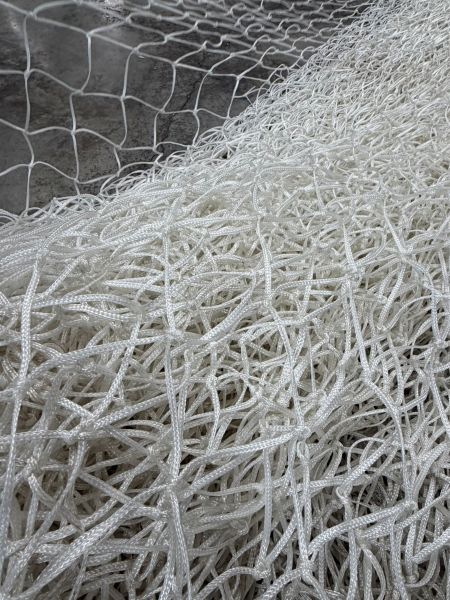
New Standards in Public Safety: The All-New "Hydrophobic Composite Fiber" Safety Netting
Three Core Upgrades Solving the Pain Points of Outdoor Protection
In public buildings, construction sites, and large-scale shopping malls, "Safety" is the non-negotiable bottom line. However, traditional safety nets exposed to the outdoors often face challenges such as UV degradation, increased weight due to water retention, and maintenance difficulties.
To enhance the protective resilience of public facilities, we officially introduce the All-New "Hydrophobic Composite Fiber" Safety Netting. Featuring three core technological upgrades, this is not just a material innovation—it is a comprehensive evolution in public safety protection.
Why Do Public Spaces Need "Hydrophobic Fiber" Safety Netting?
Protection facilities in public spaces (such as school lightwells, transit hubs, and observation decks) must withstand years of climate testing. Without specialized treatment, traditional nylon or polyester netting often sees a significant drop in structural integrity within 2 to 3 years of installation.
1. Superior Anti-Aging: "Long-Life" Performance Against Extreme Weather
The maintenance cost for public facilities is exceptionally high; frequent replacements are both time-consuming and costly.
-
Technical Highlight: Proprietary UV-stabilization technology.
-
Practical Benefit: Even in high-altitude environments with intense UV radiation or coastal areas with strong winds, the netting maintains stable physical strength, color consistency, and resistance to embrittlement. This translates to longer replacement cycles and significantly lower long-term operating costs.
2. Extreme Tensile Strength: The "Hard Power" of Public Safety
Due to high foot traffic in public areas, safety nets must be capable of withstanding sudden impacts from falling objects or intense wind gusts.
-
Technical Highlight: Advanced industrial-grade weaving technology.
-
Practical Benefit: The tensile limit is comprehensively enhanced, providing a greater safety margin. In the event of extreme weather or accidental impact, it effectively provides buffering and interception, establishing an indestructible line of defense.
3. Excellent Drainage Performance: "Lightweight" Reliability After Rain
Traditional netting absorbs water during rain, causing the weight to double or triple, which places excessive strain on the suspension structures (such as tension ropes and expansion bolts).
-
Technical Highlight: Hydrophobic fiber technology that prevents water penetration.
-
Practical Benefit: Rapid drainage after rain prevents water accumulation and weight gain. This not only protects the building's mounting structure but also prevents mold growth or odors, keeping the environment dry and clean.
Bright White Design: The Perfect Balance of Visual Alert and Aesthetics
The new Hydrophobic Fiber Safety Netting features a Bright White color scheme, offering dual advantages for public spaces:
-
Ease of Inspection: Management personnel can easily spot debris, dirt, or structural issues, ensuring the protective function remains optimal.
-
Visual Decompression: Compared to the heavy feel of traditional dark-colored nets, the pure white tone integrates seamlessly with modern architectural designs, reducing the sense of enclosure and enhancing the openness of public spaces.
Wide Range of Applications
This composite material safety netting has become the preferred choice across various professional sectors:
-
Campus Safety: Lightwells in school buildings and protection for corridor voids.
-
Transportation Engineering: Bridge construction and platform edge protection in transit stations.
-
Commercial Spaces: Atriums in shopping malls and ceiling voids in outdoor parking structures.
-
Leisure Facilities: Perimeter safety for stadium stands and scenic walkway protection.
Choosing a safety net should not be based solely on price, but on "Environmental Endurance." With its three key performance pillars—UV Resistance, High Tensile Strength, and Superior Hydrophobicity—the all-new Hydrophobic Composite Fiber Safety Netting provides a more scientific and durable protection choice for public spaces.